
Karen Bryant - Capturing Courage PRIDE Series
Some people spend their lives becoming the person everybody else relies on. The one who fixes things. The one who holds the room together. The one who keeps moving forward because there isn’t really another option.
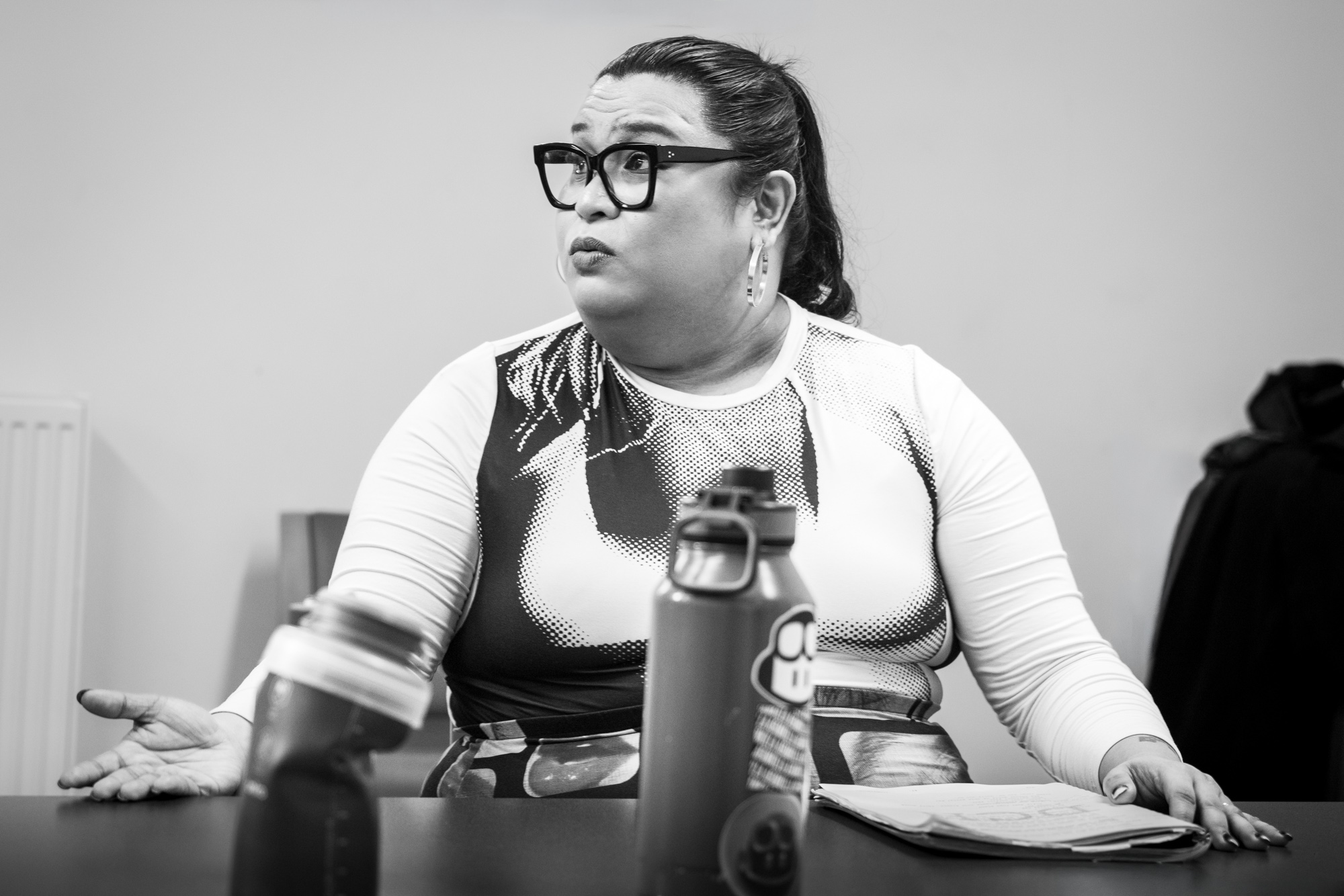
And yet when I interviewed and photographed Dax Carnay-Hanrahan recently for the Capturing Courage PRIDE series, one of the things that struck me most was how uncomfortable she seems with the idea of herself, or her characters, being placed on a pedestal.
An immigrant trans woman from the Philippines, now based in Naarm/Melbourne, Dax is a writer, performer, theatre maker and producer, whose work draws heavily from lived experience.
Throughout our conversation, she pushed back against any suggestion that she was exceptional. She rejects the idea that she herself is courageous or somehow “the finished product.” She described herself as messy. Flawed. Someone still figuring things out.
“I make mistakes”, she told me.
“I make horrible decisions. I am not ‘that girl’. I am exactly like you.”
Dax has little interest in heroes. What interests her are commonalities. People carrying grief, responsibility, doubt, humour and contradiction. People trying to do their best while getting things wrong along the way.
Dax came back to this key point of imperfection repeatedly throughout our chat, and it made me wonder if that distrust of perfection arises from an understanding of perfection as a barrier, a form of distance. Perhaps that is why her work resonates. She isn’t asking audiences to admire her characters. Instead, she wants people portrayed as people. If audiences see a flawed trans woman who is making mistakes, carrying family baggage and trying to hold her life together, they might recognise themselves. And perhaps recognition is what Dax is ultimately chasing.
It is a philosophy that is prominent throughout her writing. Dax deliberately writes characters who are complicated because she believes that is where real humanity lives. “My trans characters are always flawed,” she laughed. “They’re not Virgin Mary.”
The comment was funny, but it also revealed something essential about the way she sees the world.
“At the end of the day, once the curtain goes down, when the festivals end, when the shows are done, I’m just another… there’s nothing special about me.”
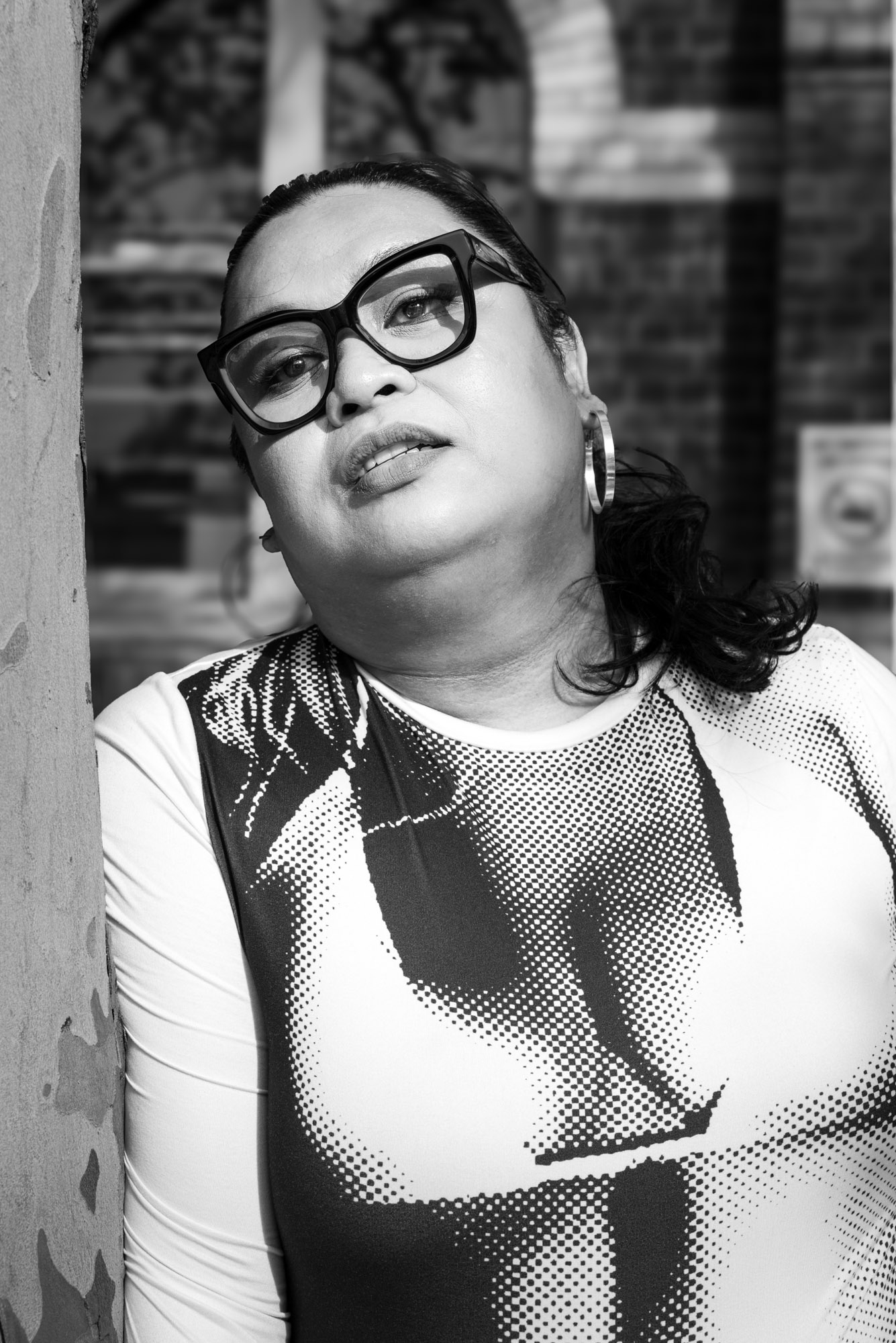
Her humour is fast. Sharp. The kind that arrives half a second before the emotional truth underneath it has time to land fully.
She jokes constantly. About producing. About writing. About trauma. About herself. But over the course of our conversation, another picture slowly emerged beneath the comedy: someone who has spent much of her life carrying expectations, responsibilities and emotional weight for other people, while rarely allowing herself to stop long enough to examine what any of it has cost her.
Whilst humour sits at the heart of Dax’s work, it is never simply for entertainment. “It’s funny, right?” she says, laughing. “And then suddenly people realise, oh f**k.” For Dax, comedy becomes a Trojan Horse, a way of disarming audiences before leading them somewhere more emotionally difficult.
Her latest play, Mr. B (Tatay Transwoman and That Tiring Tune), may be her most personal work yet. I interviewed Dax during a rehearsal break as she and her fellow cast members prepare for the work to open in its remount season, after an initial sold-out run as part of Midsumma Festival 2026. “I would say it’s more of a migrant story than a trans story.”
Part migrant story, part comedy, part ghost story, the play is about the weight of family. It follows a trans Filipino woman in Melbourne preparing for her engagement party when news arrives that her estranged father has died in Manila, forcing her back into the culturally loaded role of the “eldest son.”
The story mirrors Dax’s own experience. Despite eighteen years of distance from her father, when he died, responsibility still fell onto her shoulders. “I am the patriarch of the family,” she says matter-of-factly. At one point in our conversation, Dax describes realising she had written the play not for audiences, but for herself.
“I think people buying tickets are really just watching me do public therapy,” she jokes.
But beneath that humour is something profoundly vulnerable: a woman unpacking years of unresolved grief while trying to hold everyone else in her family together.
The path into writing wasn’t originally part of Dax’s plan, she began writing partly out of necessity.
After arriving in Australia, she enrolled at the National Institute of Dramatic Art (NIDA) to formally pursue acting, bringing with her years of experience in performance, storytelling and creative leadership from Manila. By the time she completed her training, one conversation with a tutor would fundamentally shape the direction of her career. Rather than encouraging more study, they told her something unexpected: she didn’t need more classes. The challenge wasn’t her ability. The challenge was that the industry might not know where to place someone like her in casting roles. The advice was blunt and practical. If casting directors didn’t know what roles to offer a Filipino trans woman, then she would have to show them.
Create the roles. Create the stories. Create the work that didn’t yet exist. It was a piece of advice that Dax has carried ever since.
Her deeply personal response to exclusion gradually became something much larger. She started writing characters for herself because there simply weren’t enough opportunities to play people who reflected her experience. Yet in doing so, she also created space for stories rarely seen on Australian stages, stories that sit at the intersection of migration, family, culture, obligation and expectation, grief and trans experience. Looking back now, Dax describes that early motivation as almost selfish; she simply wanted to act. But the impact has stretched far beyond herself. By refusing to wait for permission, she is helping open doors for other artists who rarely see themselves represented, proving that sometimes the most powerful creative act is not finding a place within the industry, but building one yourself.
Unlike many narratives placed for and by trans artists, her stories resist being reduced to identity alone. “They’re trans stories,” she explains, “but they’re really about humanity first.” It’s a distinction that matters deeply to her. “Most Trans stories are from white perspectives or from people who grew up here. There aren’t many stories about migrant trans people learning what it means to be Australian, while carrying another culture with them.”
An artistic journey that began as an act of survival slowly evolved into a body of work that now speaks to broader conversations around migration, race, gender, family and belonging.
Again and again, Dax returns to another idea: resisting simplification of Trans or immigrant stories.
“What’s on her brain?” she asks, speaking about the characters. “What is she actually going through as a person?” Through her work, Dax invites audiences into difficult conversations without accusation. She uses humour to soften the edges, storytelling to create empathy, and vulnerability to make space for recognition.
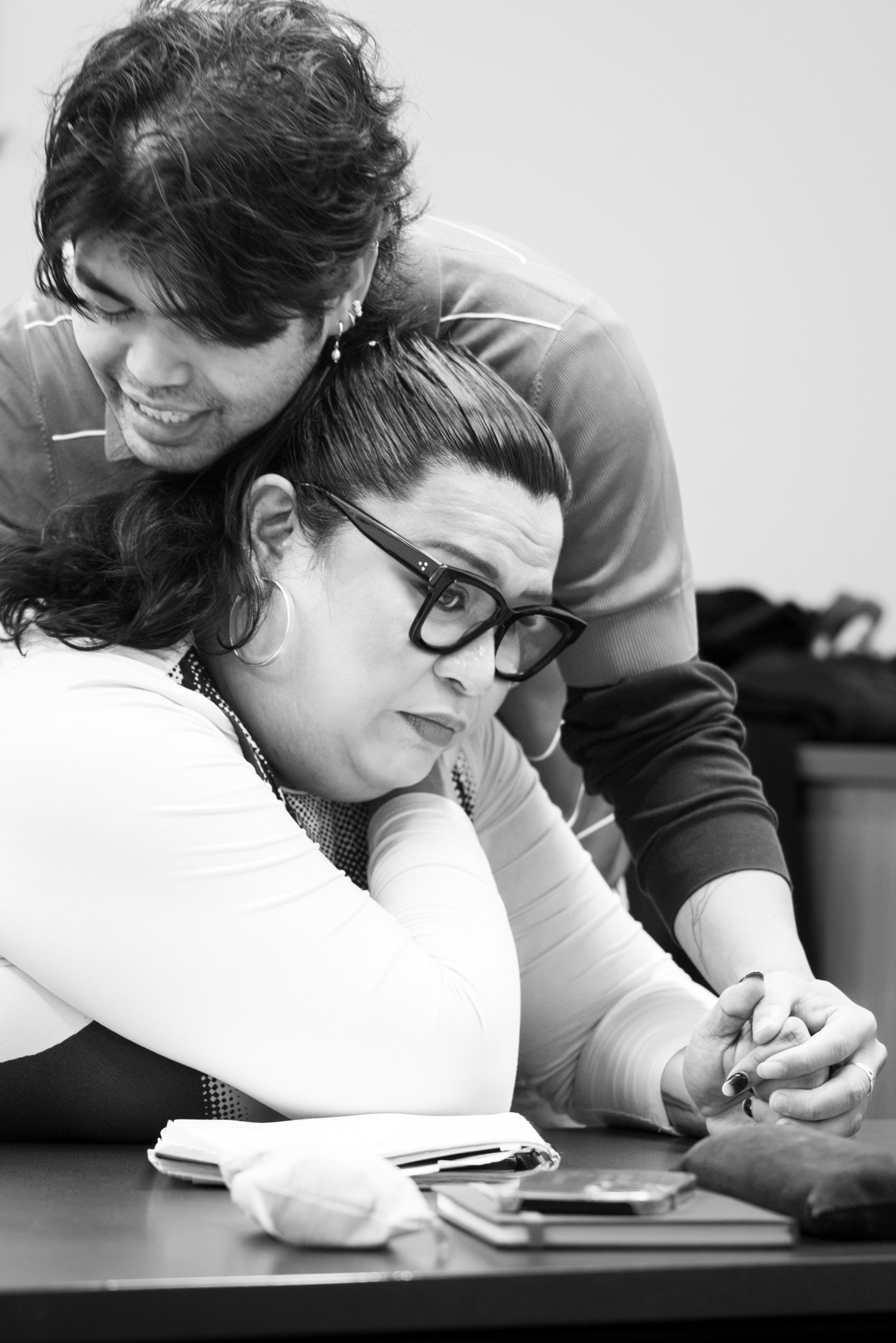
And perhaps that’s what our photography portraits ultimately captured too: not her performance alone, but the complexity beneath it. The sharp intelligence, exhaustion, tenderness, humour, grief, ambition and humanity of a woman refusing to be reduced to a single narrative.
- Karen Bryant. Capturing Courage.
MR BIG aka Tatay, A Transwoman and That Tiring Tune! by Dax Carnay-Hanrahan. Is being presented by TAYOTAYO Collective in association with fortyfivedownstairs 24 June – Sunday 5 July